Start · the problem with the question
"Simpler" is four different measurements
The usual version of this argument leans on one statistic, generally a readability score, and readability scores are a poor fit for song lyrics. They want sentences, and lyrics as published have almost no punctuation to find sentences with.
So this pulls the question apart into four things that can each be measured without sentence boundaries: how long a song is, how repetitive it is, how varied its vocabulary is, and how long its words are. They turn out to disagree with each other, which is the interesting part.
Two of the four are also deliberately length-robust. A longer song will naturally have more unique words in total, so counting unique words per song would just re-measure length. Counting them in a fixed 100-word window does not.
↓ finding one
Songs got much longer
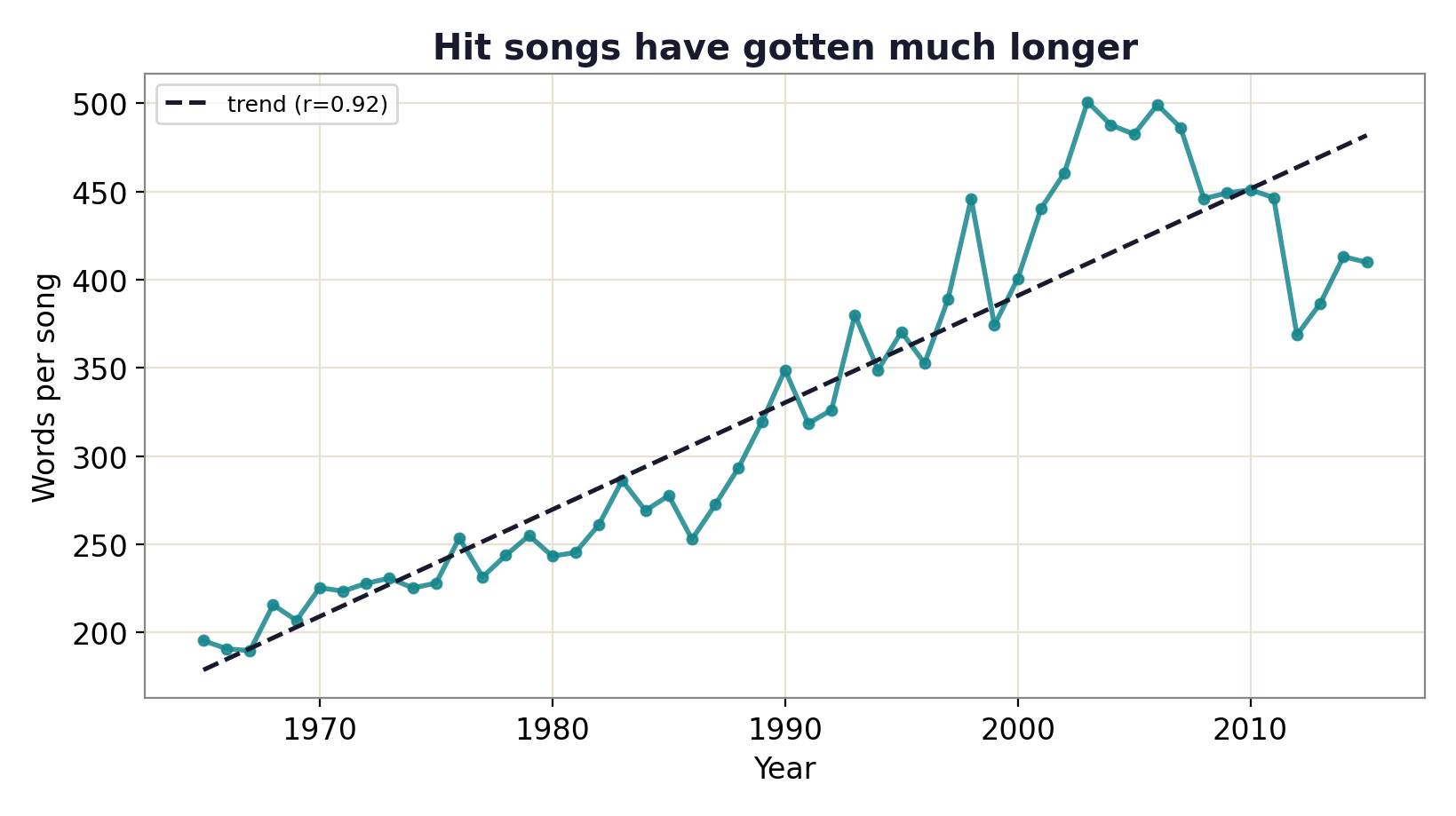
the words in a hit song, 1965 against 2015.
From about 200 words to about 410, with a correlation of 0.92 against year. This is the cleanest trend in the data and it drives a lot of what follows, which is why it comes first.
↓ finding two, with an asterisk
More repetitive — partly because they are longer
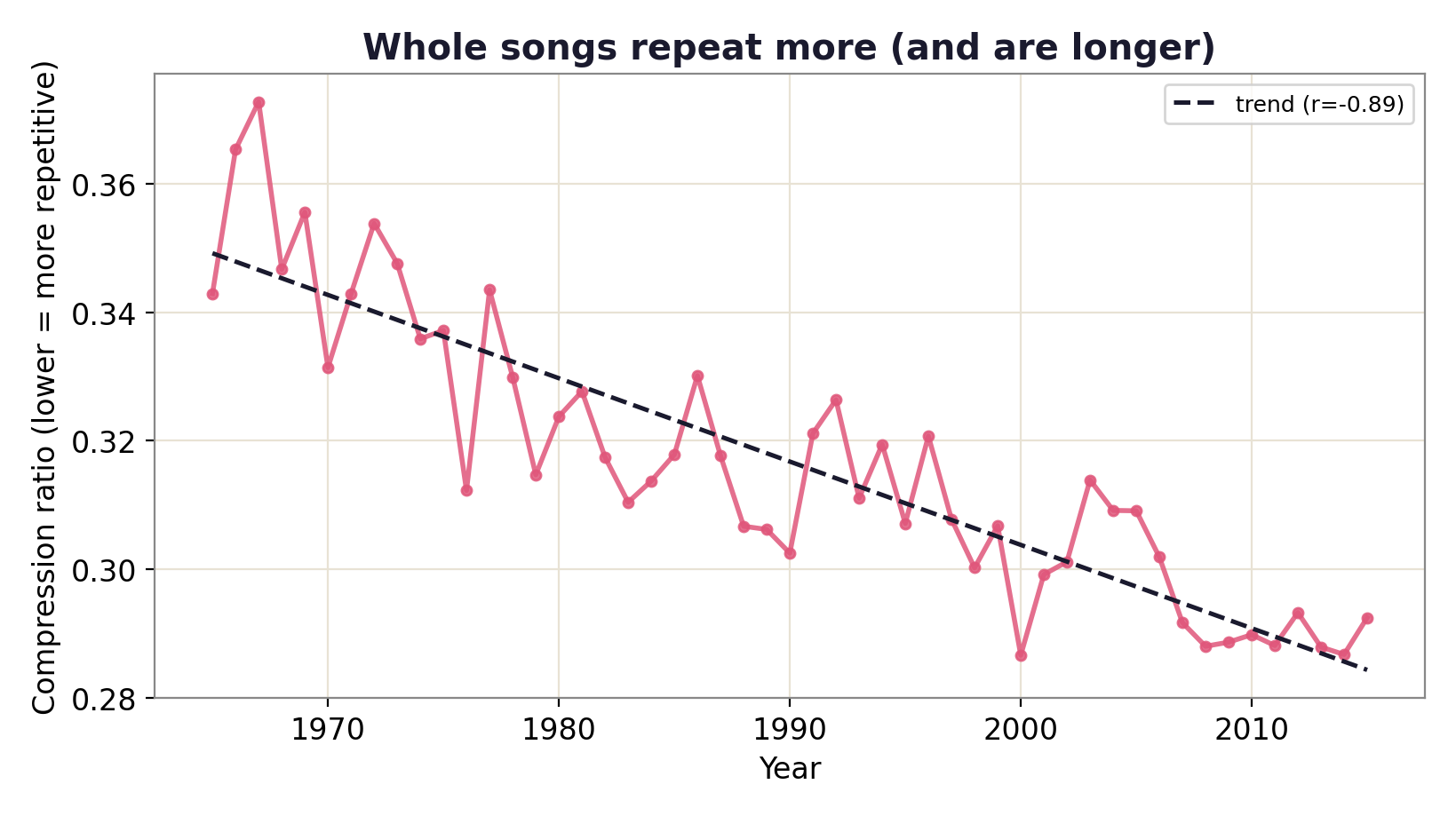
Repetition here is measured by compression: run the lyric through zlib and see how far it squeezes. Text that repeats itself compresses better. The correlation with year is −0.89, so later songs really are more repetitive as whole documents.
The asterisk matters. Length and compressibility are entangled. A longer text gives a compressor more history to exploit, so some of this trend is the length finding wearing a different hat. The honest statement is that whole songs repeat more, not that any given line does.
↓ finding three
The vocabulary did not shrink
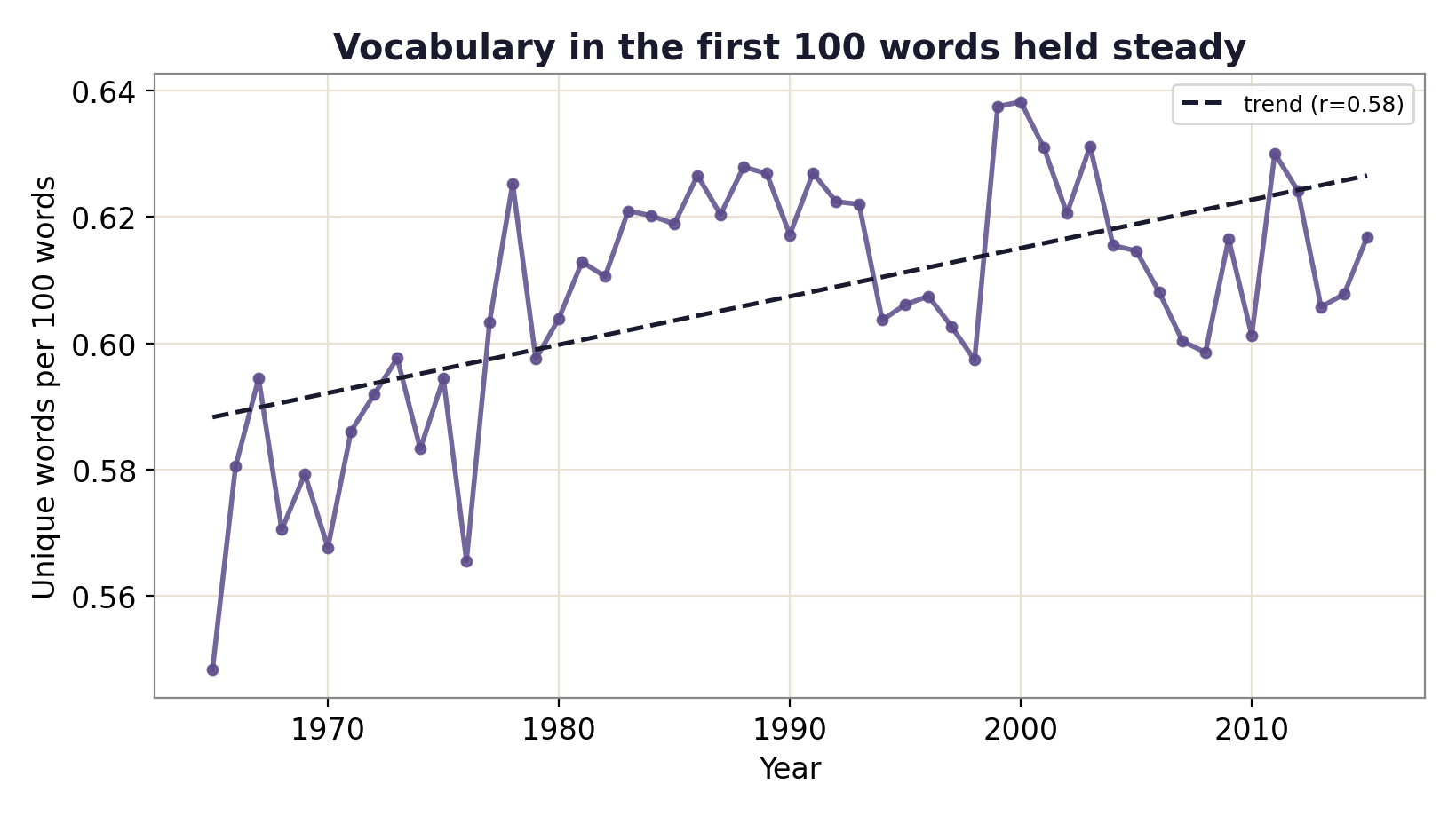
This is where the popular claim comes apart. Measured in a fixed 100-word window, so length cannot contaminate it, unique-word count rose about 7% across the fifty years. Not a large move, and not the direction the "dumbing down" story predicts.
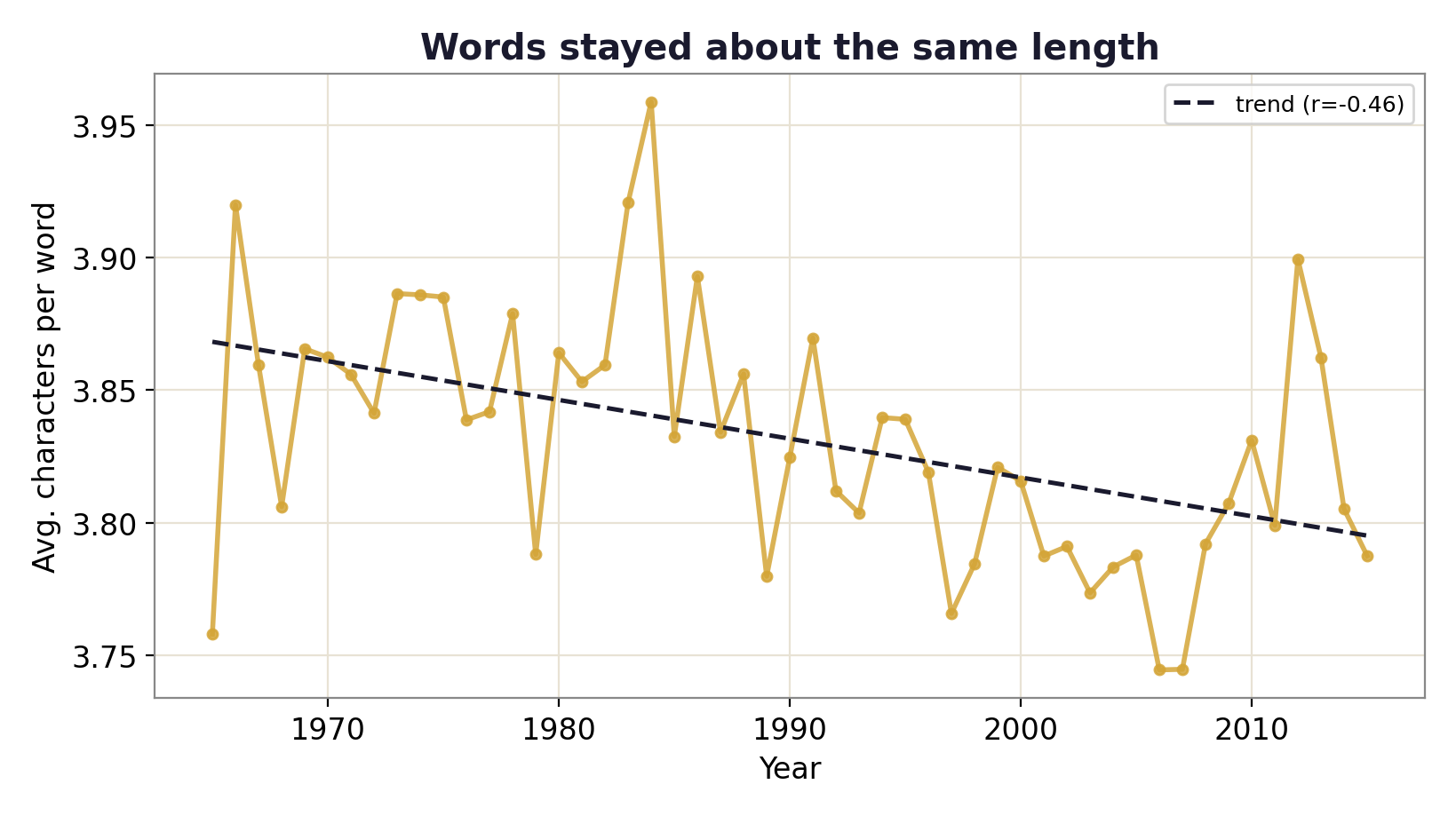
Mean word length is flatter still: essentially unchanged from 1965 to 2015. Whatever else happened to pop music, nobody started reaching for shorter words.
Pop lyrics did not get simpler. They got longer, and they say the same things more times.
The four measures, reconciled↓ what this cannot tell you
Chart hits, not music
This is the Billboard Year-End Hot 100, which is a commercial ranking, not a sample of what was recorded. It tracks what sold. A genuine shift in the chart's genre mix — the arrival of rap, which is both longer and denser — moves these lines without anybody's writing changing at all.
The lyrics also arrive lowercased with punctuation stripped, which is why every measure here avoids sentences. It is a real constraint on the dataset rather than a choice, and it rules out the readability scores this question usually gets answered with.
Songs under 50 words are excluded, so instrumentals and fragments do not distort the vocabulary windows.
Finish · how it was built
Where the numbers come from
- Data
- Billboard Year-End Hot 100 lyrics 1965–2015, from the public walkerkq/musiclyrics dataset
- Sample
- 4,816 songs, after dropping anything under 50 words
- Length
- Words per song
- Richness
- Unique words within a fixed 100-word window, so it cannot re-measure length
- Repetition
- zlib compression ratio over the whole lyric
- Built with
- Python, pandas, matplotlib
- Related
- The same lens, pointed at television, in the Love Island lexical analysis, and turned into a tool in the EPUB reading-level analyzer