A world record has a lifespan. It is born the day it is set and dies the day someone beats it, and the records standing today simply haven't died yet. That is exactly the shape of a survival analysis: durations, some of them still running. So I turned a century of athletics into survival data, ~250 record "reigns" across nine events, and let the model tell us how long records live, why that's changing, and which current records look most exposed.
Records fall fast, but far less than they used to
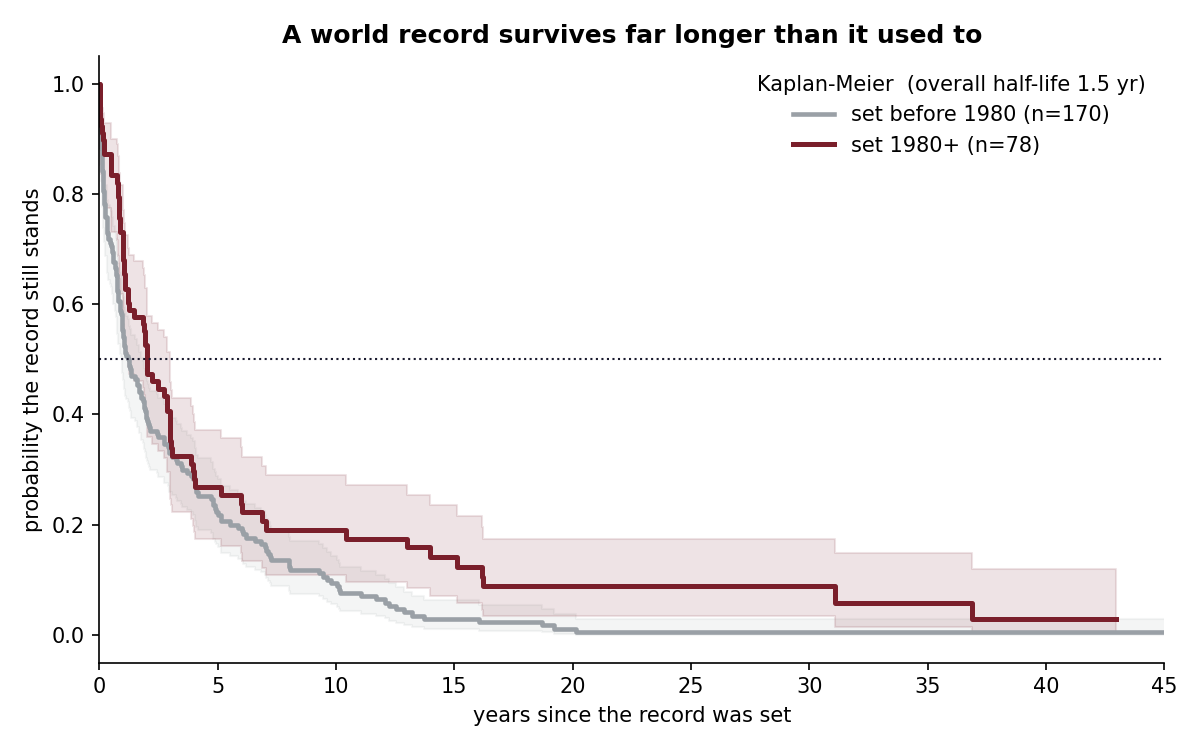
The median record survives only about a year and a half: someone is usually right behind. But that number hides a heavy tail, and the tail is growing. Split the survival curve by era and a record set since 1980 clearly outlives an older one. The modern game is harder to move. A proportional-hazards model agrees: being a modern record roughly halves the chance of being broken, and records set by a big margin last longer still.
Every progression bends toward a wall
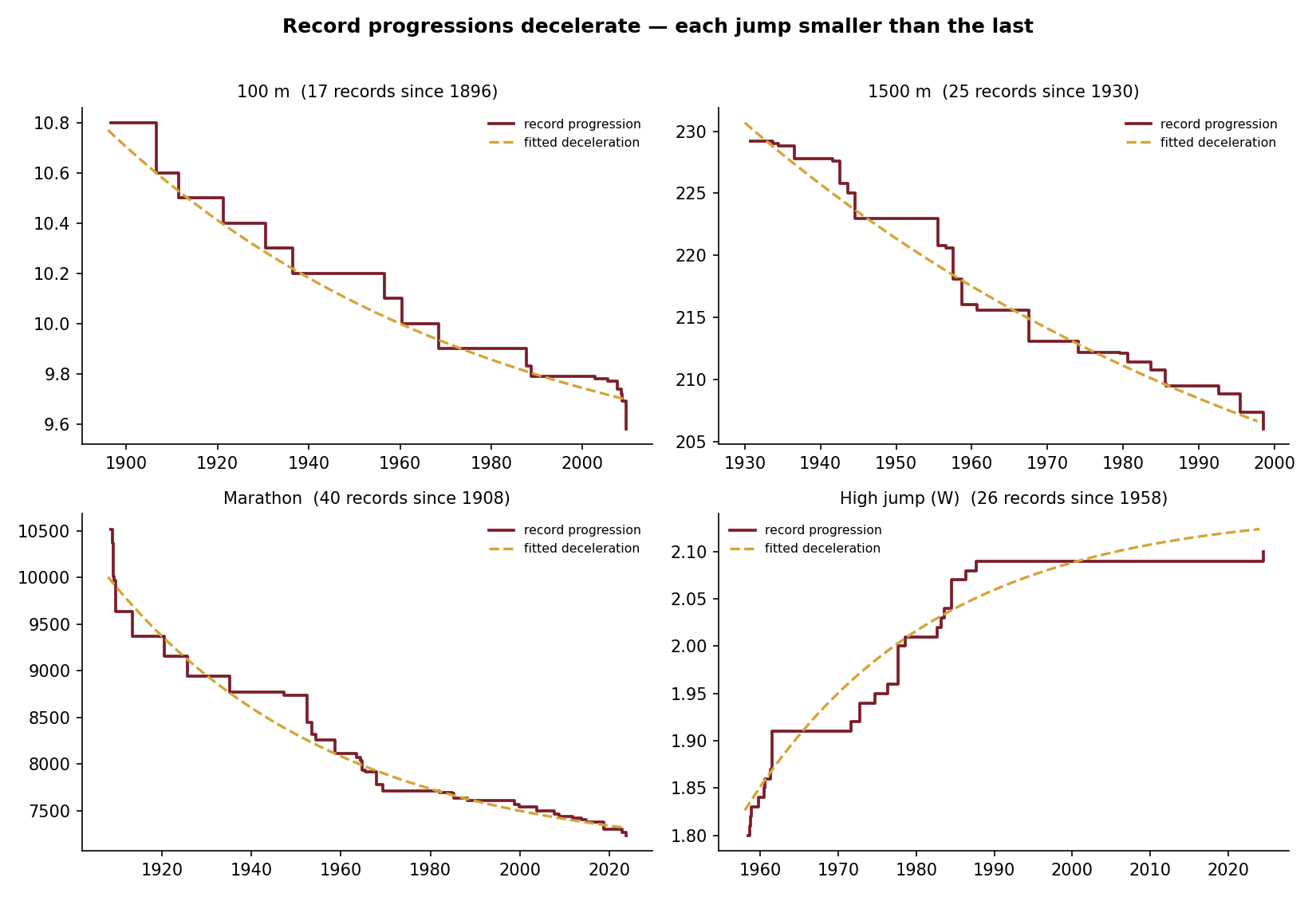
Plot each event's record over time and the same shape appears everywhere: each new record shaves a little less than the one before, the curve flattening toward some human limit. For the women's 800 m and high jump that plateau has plainly arrived; for the distance events the curve is still dropping.
So which record falls next?
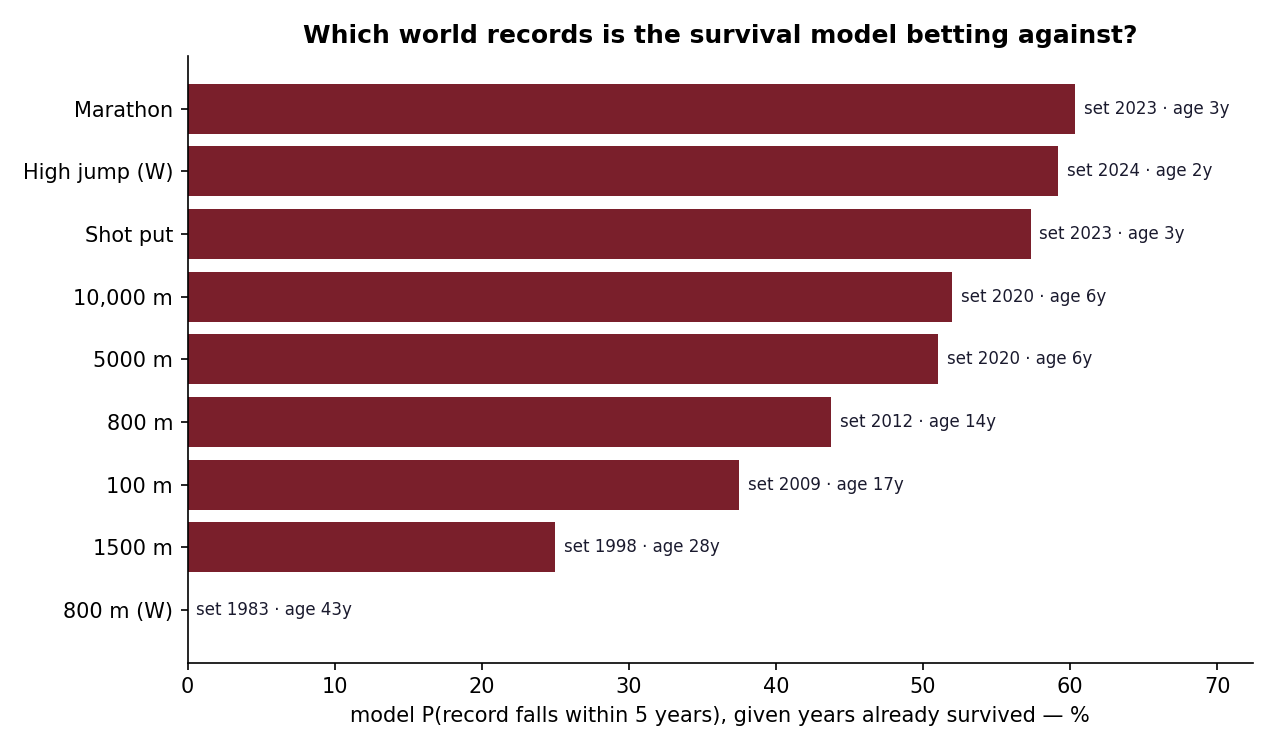
Because a record's risk is highest early, the cleanest forecast comes straight from the survival curve: given that a record has already survived so many years, what's the chance it falls in the next five? Fresh records score high. The 2023 marathon (~60%) in the super-shoe era, the 2024 women's high jump (~59%). Old records have earned their safety by surviving the dangerous years, and Kratochvílová's 1983 women's 800 m comes out near zero, the statistical picture of a record no one expects to fall.
A note on the data
The progressions come from Wikipedia, but those pages bury the real record history among top-lists and side tables, scrape carelessly and you get truncated or fictional records. Every event here had to pass a hard test: its reconstructed best must equal the current ratified world record. Nine events passed; the rest were left out rather than shown half-true. The code and full method are on GitHub.